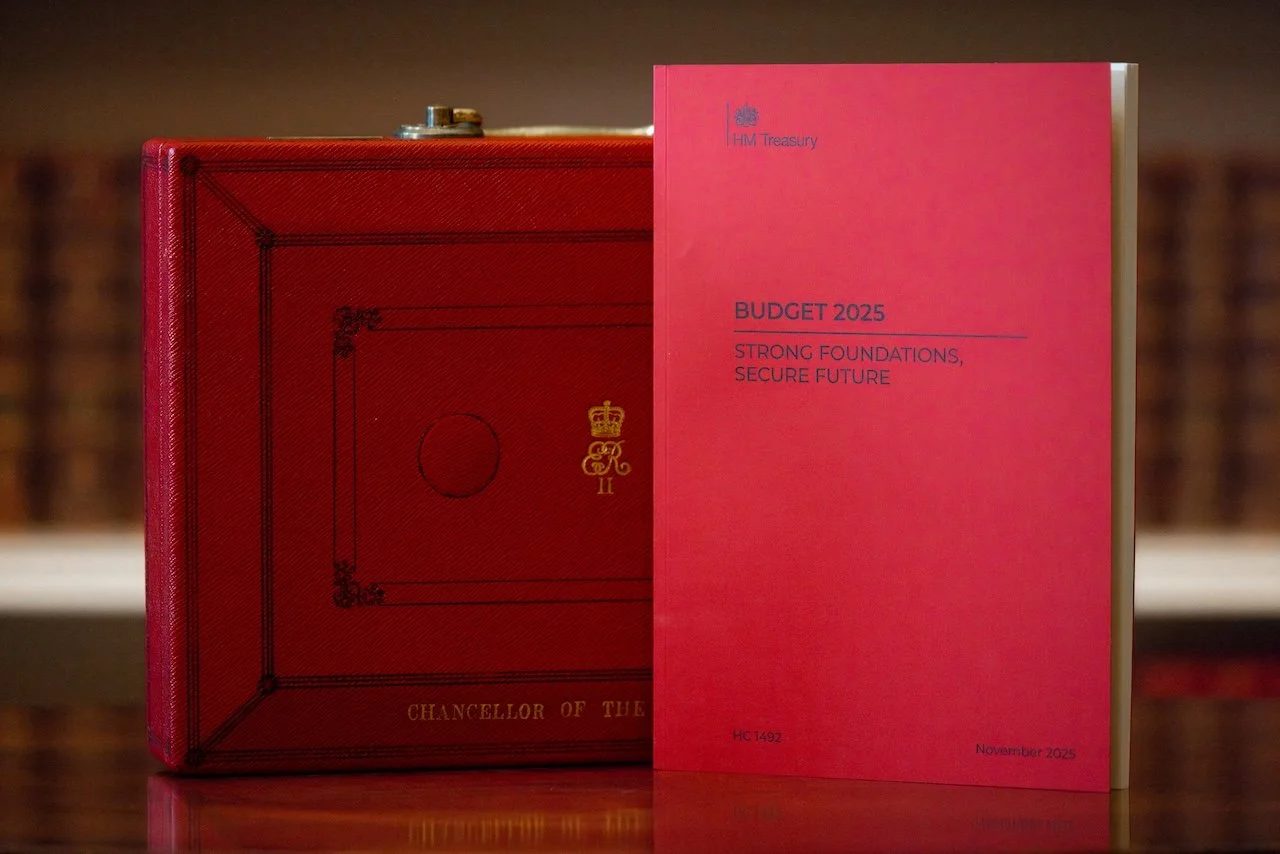
Image: HM Treasury (X)
Charting a smoother course to Net Zero
Reflections on incentives, industry, and the evolving vision for a sustainable UK after the Budget.
If you’ve been following the latest twists and turns in the UK’s journey toward Net Zero, you’ll know there’s no shortage of debate, ambition, and – yes – occasional frustration. Even as the Government announced new investment in charging infrastructure this week, it’s hard not to sense a bit of impatience: incentives for electric vans are already being rolled back, even though only one in 10 new vans sold are electric.
With vehicle manufacturers mandated to reach 70% electric van sales by 2030, it prompts the question: is this the right moment to introduce road user charging, or does it feel somewhat premature? If I was being cynical I’d say it’s less about green decision making and more a trojan horse for road user charging… Meanwhile the road to widespread EV adoption still looks to be long and winding (pardon the pun!).
This year’s Budget included a number of commitments that, while positive for Net Zero, were notably framed by the Government in terms of energy security and managing energy costs. Green energy featured strongly, but the emphasis was as much on securing the nation’s energy future as on decarbonisation. Notably, the pre-announced significant investment earmarked for new nuclear capacity, including Small Modular Reactors (SMRs).
The prominence of industrial strategy and research and development – particularly in clean technologies – signals a long-term commitment to innovation and resilience, with further detail on energy pricing changes set to follow. The Finkleton Report has rightly been praised for its bold recommendations, and the Government’s pledge to respond within three months underlines the momentum in this space. Perhaps most encouragingly, the strong theme of boosting domestic supply chains, drawing on hard-won lessons from offshore wind, to not only reduce imported emissions but also to support jobs and skills at home.
On the home front, there’s still a sense of waiting. The Warm Homes Plan, which many hoped would offer a clear blueprint for retrofitting homes and improving energy efficiency, remains unpublished – I suspect stalled by budget wrangling. Meanwhile, the underwhelming ECO+ scheme is winding down, which should help lower bills but leaves some uncertainty about scaling retrofit. The Government has hinted at ongoing support for home insulation, but without firm policy commitments, it’s tough to see how we get from ambition to action. Against this backdrop, it’s understandable why energy and climate experts argue that piecemeal measures aren’t enough; with the Government’s challenges demanding a truly integrated approach, NESO faces a near-impossible task in managing supply and demand on a green grid when the policy goalposts keep shifting.
“What we’re witnessing is a step toward a more nuanced, pragmatic approach – one that balances ambition with economic reality and real-world progress.”
Amidst these challenges, a risk looms for the UK steel industry, which finds itself caught between Net Zero commitments and the reality of global markets. If our own specifications and infrastructure plans don’t align – and if we default to importing steel – we risk undermining not just our climate goals, but the jobs and capabilities that underpin a resilient, sovereign industry. There’s a strong case here for pragmatic compromise, ensuring that climate progress and industrial strength go hand in hand.
Yet, within all these hurdles lies a genuine opportunity. Productivity – unlike Net Zero – was front and centre in the recent budget. If we can learn to do more with less, harnessing efficiency in every sector, we’ll not only cut carbon but also drive economic growth. For construction alone, this could mean a £35 billion annual boost. If achieved in tandem with the Government’s clean energy targets, lower carbon intensity would be coupled with real prosperity – something business, government, and the wider public can all rally behind.
So, is the UK’s Net Zero vision being diluted? I’d say it’s evolving. What we’re witnessing is a step toward a more nuanced, pragmatic approach – one that balances ambition with economic reality and real-world progress. For those committed to a sustainable future, our role is to keep nudging the conversation forward, championing bold targets while welcoming practical, inclusive steps to get us there. At a time when the country needs less division and more collaboration, it’s an approach that could help us all breathe a little easier – literally and figuratively.
Hannah Vickers is managing Director of Built Confidence.